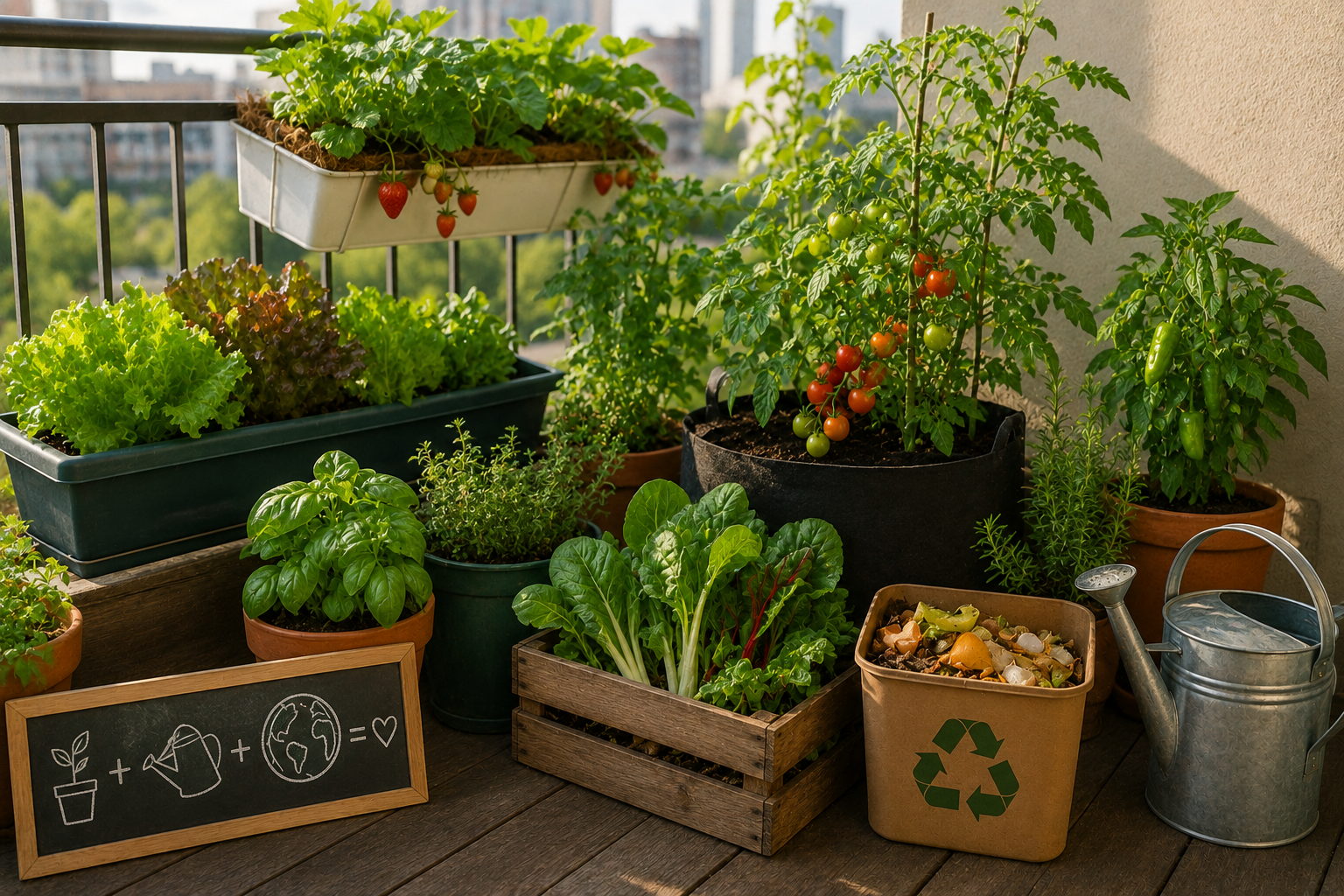
In a world facing climate change, growing food at home has become more than a hobby. It’s a sustainable act—an effective way to reduce your carbon footprint, waste less, and reconnect with nature.
Whether you live in a house with a big yard, a small apartment with a balcony, or even just a sunny windowsill, you can take control of your food system and make a difference.
This guide is for beginners and enthusiasts alike. You’ll learn how to grow your own fruits, vegetables, and herbs with simple, eco-friendly methods that save energy, water, and money. And most importantly, you’ll understand how your small efforts create big environmental impact.

Harvest rainwater the smart way and use it to nourish your garden—eco-friendly, efficient, and budget-conscious.
What Does It Mean to Reduce Your Carbon Footprint?
Your carbon footprint is the total amount of greenhouse gases (like carbon dioxide and methane) that you produce through your activities. This includes things like driving, using electricity, eating certain foods—and yes, even buying groceries.
Food production and transportation are major contributors to global emissions. The vegetables you eat may travel hundreds or thousands of kilometers before reaching your plate. They’re often packaged in plastic, stored in cold warehouses, and grown with chemical fertilizers.
When you grow food at home, you eliminate much of that:
- No transportation emissions
- No packaging waste
- Less need for refrigeration
- Reduced reliance on industrial farming
It’s a cleaner, healthier, and more sustainable way to eat.
Step 1: Understand What You Can Grow
You don’t need a farm to grow food. With the right plants, you can grow a surprising amount in small spaces.
Great plants for beginners:
- Leafy greens: lettuce, spinach, arugula, kale
- Herbs: basil, parsley, cilantro, mint, thyme
- Root vegetables: radishes, carrots, green onions, beets
- Tomatoes (especially cherry tomatoes)
- Peppers and chilies
- Beans and peas
- Strawberries
- Microgreens and sprouts
Many of these can grow in pots, raised beds, or even recycled containers.
Step 2: Choose the Right Location
Sunlight is key. Most edible plants need 6 to 8 hours of sun per day. Observe your space—balcony, window, backyard, patio—and note where the light is best.
If you’re working indoors:
- Place pots near south-facing windows
- Use grow lights if natural light is low
Make sure the area is safe, clean, and has access to water.
Step 3: Use Local and Organic Materials
Every gardening decision affects your environmental impact. Choose:
- Organic seeds or seedlings
- Local compost or worm castings
- Reused containers (buckets, jars, crates)
- Natural pest control methods
- Rainwater or greywater when possible
Avoid synthetic fertilizers and plastic planters. The goal is to stay as natural and local as possible.
Step 4: Compost Your Waste
Composting is essential. It reduces landfill waste and gives your plants natural nutrients.
You can compost:
- Fruit and vegetable scraps
- Coffee grounds
- Eggshells
- Tea leaves
- Grass clippings and leaves
Avoid meat, dairy, and oily foods. You can use a small bin, worm farm, or bokashi system depending on your space.
Compost reduces methane emissions in landfills and replaces chemical fertilizers.
Step 5: Plant What You Eat Often
The best way to stay sustainable is to grow what you actually use. Think about your daily meals. If you use basil every week, grow basil. If you cook with green onions, plant those.
High-impact, low-effort foods to grow:
- Lettuce: quick to grow and harvest
- Herbs: endless supply from one plant
- Tomatoes: high yield in small space
- Radishes: ready in less than a month
- Microgreens: nutrient-packed and grow indoors
This ensures nothing goes to waste and reduces your need to buy store-bought items.
Step 6: Practice Companion Planting
Certain plants grow better together. They help deter pests, enrich the soil, and boost yields. This natural approach reduces the need for pesticides or artificial inputs.
Good combinations:
- Basil + tomatoes
- Carrots + onions
- Beans + corn + squash (the “Three Sisters”)
- Lettuce + radishes
- Peas + mint
It also maximizes space—perfect for small gardens.
Step 7: Use Vertical and Container Gardening
If you’re short on ground space, go up!
Vertical gardens use walls, shelves, trellises, and hanging containers to grow more in less space. You can grow:
- Climbing beans
- Cucumbers
- Peas
- Cherry tomatoes
- Strawberries
Container gardening allows flexibility. You can move pots to follow the sun, protect from wind, or bring them indoors in winter.
Step 8: Harvest Wisely and Often
Many plants continue to produce if you harvest regularly. Picking leafy greens or herbs encourages more growth. Use clean scissors or fingers and harvest in the morning when plants are most hydrated.
Eat what you grow—fresh, local, and full of flavor. No plastic, no emissions, no waste.
Step 9: Store and Preserve Your Food
If you grow more than you can eat, preserve the surplus sustainably:
- Freeze herbs in olive oil
- Dry leaves or flowers
- Pickle vegetables
- Store root vegetables in cool, dark places
- Share extra produce with neighbors or donate
Preserving food reduces waste and helps you eat from your garden year-round.
Step 10: Track Your Impact
Seeing your results helps you stay motivated.
Track:
- How many items you no longer buy
- How much kitchen waste you compost
- The cost savings of growing food
- The number of plastic packages avoided
It may not seem like much, but every head of lettuce or bunch of basil grown at home reduces fuel, plastic, refrigeration, and pollution.
Common Questions About Growing Food at Home
Is it expensive to start?
Not necessarily. Many home gardens start with reused containers, seeds from kitchen scraps, and homemade compost. Over time, the savings far outweigh the small startup cost.
What if I don’t have outdoor space?
You can grow many herbs, greens, and small vegetables indoors. Use windowsills, shelves, or indoor grow lights. Sprouts and microgreens are perfect for limited space.
How do I deal with pests naturally?
Use garlic spray, neem oil, or insecticidal soap. Encourage ladybugs and spiders, and plant flowers that attract helpful insects. Keep your plants healthy to reduce pest vulnerability.
Can I grow food year-round?
Yes, with the right planning. Grow cool-season crops in fall and spring. Use cloches or mini greenhouses in winter. Indoors, grow herbs and microgreens year-round.
Final Thoughts: From Garden to Climate Action
You don’t need to be a farmer to make a difference. Every homegrown tomato, every reused container, every composted scrap is a small act of climate action.
Growing food at home empowers you:
- To eat more locally
- To waste less
- To shrink your footprint
- To gain independence
- To connect with nature
It’s satisfying, nourishing, and deeply sustainable.
Your garden isn’t just about what you eat. It’s about how you live.
The soil is ready. The seeds are small. But the impact? It’s huge.