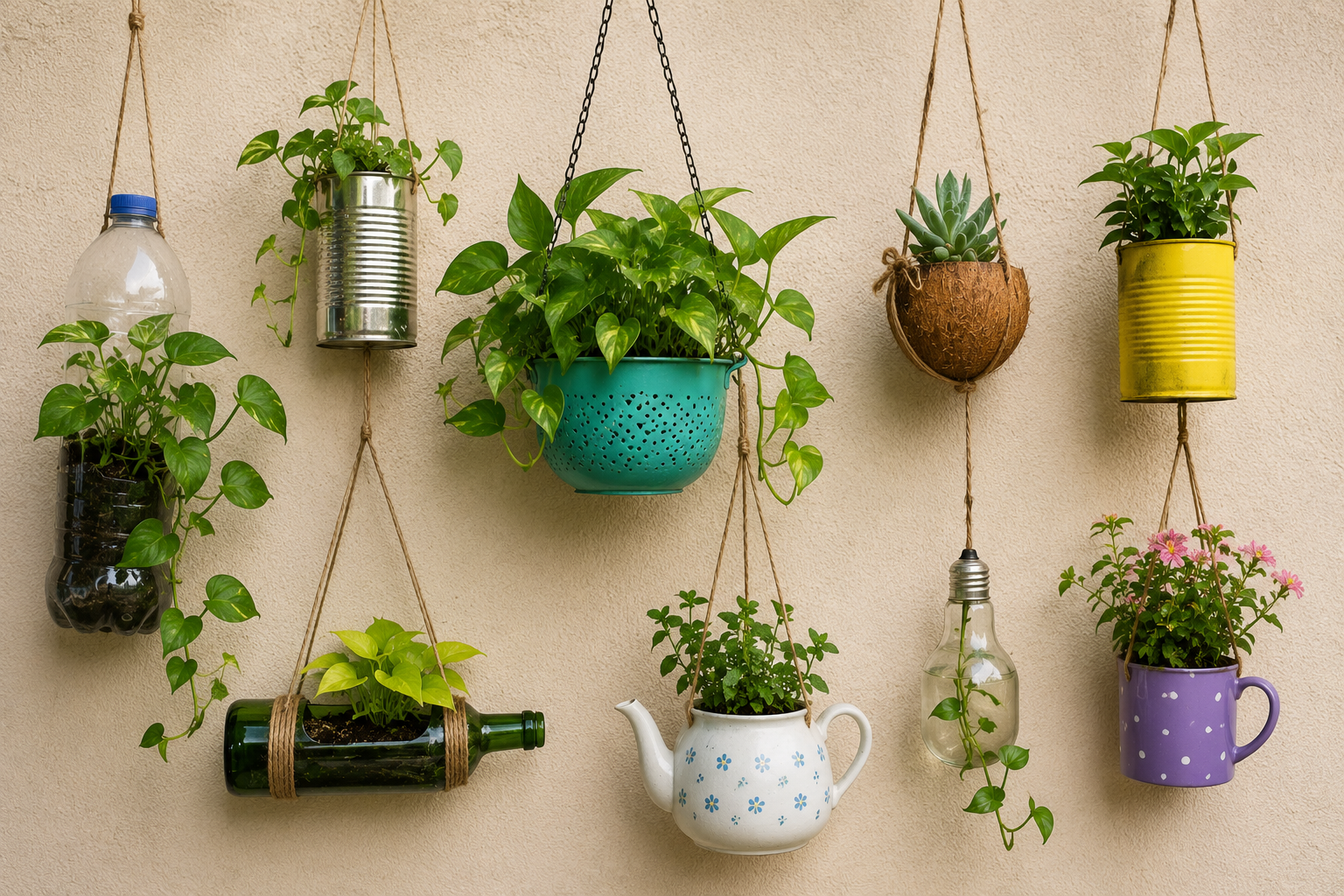
Gardening is more than just planting in the ground—it’s about creativity, space-saving solutions, and making the most of what you already have.
One of the easiest and most rewarding ways to do that is by creating hanging planters using items you likely have around your home.
Hanging planters are perfect for small spaces, balconies, patios, or for adding vertical interest to your garden. You don’t need to spend money on fancy pots or metal chains.
With a bit of imagination, you can transform household items into stylish and functional hanging planters that make your green space truly unique.
This guide will walk you through the process of making beautiful, practical, and budget-friendly hanging planters from recycled materials. You’ll also learn what types of plants work best, how to hang them securely, and how to keep your vertical garden healthy and thriving.
Let’s take your garden to new heights—literally.
Why Hanging Planters Are a Great Option
Whether you’re short on space or simply want to add visual interest, hanging planters offer several benefits:
- Maximize vertical space: Ideal for balconies, fences, or walls
- Improve air circulation: Helps prevent plant disease
- Easy to rearrange: You can move them based on sunlight or season
- Aesthetic appeal: Adds beauty at eye level or above
- Budget-friendly: Especially when made from repurposed items
Creating hanging planters is also a fantastic DIY project for adults and kids alike. It turns old objects into green art.
Everyday Items You Can Use as Hanging Planters
You’d be surprised at how many common household items can be transformed into planters. Here are some great candidates:
- Tin cans (soup cans, coffee tins)
- Plastic bottles (cut and flipped)
- Colanders (already have drainage holes)
- Old teapots or kettles
- Mason jars or glass jars
- Rain boots
- Fabric shoe organizers
- Plastic containers from yogurt, ice cream, or takeout
- Woven baskets
- PVC pipe cut sections
- Old purses or handbags
All it takes is a little creativity and some basic DIY tools to make these items garden-ready.
What You’ll Need
Depending on the item, your list may vary slightly. But in general, you’ll need:
- Scissors or utility knife
- Drill (for drainage and hanging holes)
- String, twine, wire, or chain
- Hooks or nails (to hang the planter)
- Soil
- Plants or seeds
- Paint (optional, for decoration)
- Glue gun (optional for attachments)
Safety note: If you’re using glass or sharp metal, always wear gloves and eye protection.
Step-by-Step: Making a Hanging Planter from a Tin Can
This is one of the simplest and most effective options for DIY hanging planters.
Step 1: Clean and Prep the Can
Remove any labels, rinse thoroughly, and make sure there are no sharp edges around the rim. You can sand the edges or cover them with tape if needed.
Step 2: Drill Drainage Holes
Use a drill or hammer and nail to create 2–3 small holes in the bottom. This prevents root rot by letting excess water escape.
Step 3: Add Hanging Holes
Drill two holes near the top of the can, directly across from each other. Thread string or twine through the holes and knot securely.
Step 4: Decorate (Optional)
Paint your can with waterproof acrylic paint or spray paint. You can also wrap it with rope, washi tape, or fabric for a rustic or boho look.
Step 5: Add Soil and Plants
Fill with potting mix and plant herbs, small succulents, or trailing flowers. Water gently after planting.
Step 6: Hang Securely
Use a sturdy hook, nail, or railing to hang your planter. Make sure the weight is supported and stable.
Other Creative DIY Hanging Planter Ideas
Let’s explore a few more options using different materials:
Plastic Bottle Planter
- Cut a 2-liter bottle in half
- Punch two holes near the top of the bottom half
- Add soil and herbs or small flowers
- Use twine to hang from a balcony or hook
- Paint or decorate the outside for flair
Colander Hanging Basket
- Use an old colander with holes for drainage
- Line with moss or fabric if needed
- Add soil and cascading flowers
- Attach three equal-length chains to the rim
- Hang from a hook on a patio or porch
Mason Jar Planters
- Drill a small drainage hole in the bottom (optional if you’re careful with watering)
- Use wire or hose clamps to create a hanging loop
- Best for small herbs or succulents
- Hang from a wooden board or directly on a wall
Shoe Organizer Wall Garden
- Hang vertically on a fence or wall
- Fill each pocket with soil and plants
- Great for lettuce, strawberries, or herbs
- Easy to water and harvest
Teacup or Kettle Planters
- Drill drainage hole at the bottom
- Attach wire around the handle or spout
- Hang from tree branches or shepherd’s hooks
- Best for decorative plants or succulents
Choosing the Right Plants
The best plants for hanging planters are those that are compact, trailing, or lightweight. Some great options include:
Herbs
- Basil
- Mint
- Thyme
- Oregano
- Parsley
Succulents
- String of pearls
- Burro’s tail
- Echeveria
- Crassula
Flowers
- Petunias
- Lobelia
- Nasturtium
- Marigolds
- Begonias
Edibles
- Strawberries
- Lettuce
- Spinach
- Cherry tomatoes (small planters with strong hooks)
Avoid large plants with deep roots—they won’t thrive in small containers.
How to Water and Maintain Hanging Planters
Because they’re exposed to more air and light, hanging planters tend to dry out faster than ground-level containers.
Here are some tips:
- Check moisture daily, especially in hot weather
- Use a watering can with a long spout to reach hanging pots
- Group similar planters together to make watering easier
- Add mulch to retain moisture
- Fertilize lightly every 4–6 weeks with compost or liquid fertilizer
- Prune trailing plants to keep them looking tidy
If your planter is heavy, make sure your hook or support is strong enough to hold it—even after watering.
Sustainability Tips
This project is not just creative—it’s eco-conscious too.
- Use non-toxic paint and sealers
- Reuse materials you already own
- Choose organic potting mix
- Compost old plants when replacing them
- Save seeds from your plants to replant next season
- Avoid plastic wherever possible
Upcycling is a powerful way to reduce waste and promote sustainable gardening.
Frequently Asked Questions
Can I use containers without drainage holes?
It’s not ideal. You can add a layer of gravel at the bottom, but water may still pool. Try drilling small holes to allow drainage.
What’s the best string or rope for hanging planters?
Natural jute twine, cotton rope, or metal chains all work well. Make sure they’re weather-resistant if outdoors.
Can I use these planters indoors?
Yes! Just be careful with drainage. Use a saucer underneath or choose plants that don’t need much water.
How do I keep planters from swinging in the wind?
Secure them near walls or railings, or use stabilizing hooks. Avoid overly lightweight planters in windy areas.
How long do recycled planters last?
It depends on the material. Plastic and metal last longer than untreated wood or fabric. Protect from sun and rain when possible.
Final Thoughts: Garden Art Meets Smart Recycling
Hanging planters are a beautiful solution for gardeners of all kinds—whether you’re in a small apartment or a full backyard garden. They let you grow upwards, save space, and reuse materials in a meaningful, practical way.
And the best part? Every planter tells a story. A soup can becomes a basil pot. A boot becomes a bed of marigolds. An old teacup becomes home to a tiny succulent.
The next time you’re about to toss something away, ask yourself—could this be a planter? You’ll be amazed at what’s possible when you think vertically.